
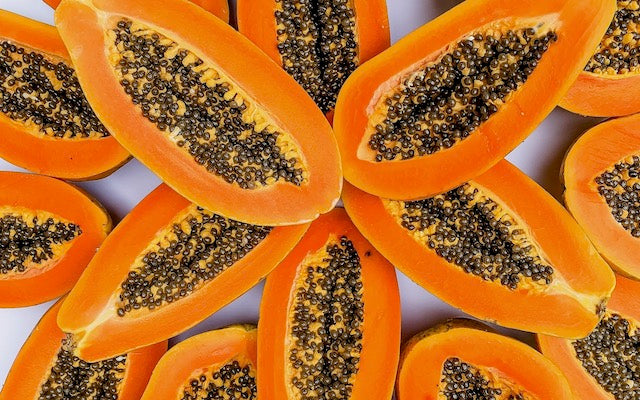
Papaya is a soft and delicious fruit that has the texture and sweetness of cantaloupe and the tropical flavor of mango. So if you like those two fruits (or if your bearded dragon does!), you might wonder, can bearded dragons eat papaya?
Can Bearded Dragons Eat Papaya?
The short answer: yes! Bearded dragons can safely eat papaya once a week.
Why Can Bearded Dragons Eat Papaya?
Although fruit is not a big part of a bearded dragon’s diet (largely due to the sugar content and high water content), there are some fruits that they can eat more frequently than others. Papaya is one of those fruits!
Papaya has some great benefits for bearded dragons:
- Calcium, which is vital for healthy bones, muscles, tissue, and overall wellness
- Vitamin C, which is good for the immune system
- Vitamin A, which helps keep their vision sharp
- Antioxidants, which promote healthy cells
- Fiber, which is good for digestion
- Water content, which is great for hydration (obviously!)
Papaya is low in sugar, too. Captive bearded dragons can become obese if they eat too much fruit. When they do eat fruit, it’s a perk if the fruit is low in sugar.
Finally, the calcium to phosphorus ratio—5:1—is great news for bearded dragons. If a food has more phosphorus than calcium, it’s automatically less safe for bearded dragons, regardless of any other nutritional value. This is because phosphorus depletes calcium. It does so by preventing calcium from being absorbed into the bearded dragon’s bloodstream. If a bearded dragon is already calcium-deficient, or eats a significant amount of phosphorus, calcium will actually be pulled out of the bearded dragon’s bones, resulting in metabolic bone disease.
Why Can’t Bearded Dragons Eat Papaya All the Time?
So papaya has a great calcium to phosphorus ratio. It’s got antioxidants and vitamins, and it sounds like it’s an overall great food for bearded dragons. Why can’t they eat it every day?
In general, bearded dragons shouldn’t eat fruit every day—not even healthy fruit like papaya. The sugar and water content alone can cause issues such as weight gain, diarrhea, and constipation if your reptile eats fruit on a daily basis. Greens and nutritious feeder insects are staples that provide essential nutrients, whereas fruit is a treat.

What Other Fruits and Vegetables Can Bearded Dragons Eat?
In addition to papaya, bearded dragons can eat…
- Calcium-rich greens such as collard greens, alfalfa, mustard greens, and prickly pear
- Various kinds of squash
- Green beans
- Snap peas
- Pumpkin
- Apples
- Blueberries
- Strawberries
How to Serve Papaya to Your Bearded Dragon
Papaya is a fairly soft fruit. Just peel it and cut it into small pieces. To prevent choking, make sure the pieces are no bigger than the space between your dragon’s eyes.
Pro Tip: If your dragon struggles to eat his greens but enjoys papaya and other fruits, try chopping staple greens with some berries and papaya to make an appetizing chunky salad.
Can Bearded Dragons Eat Frozen Papaya?
Frozen veggies and fruits are perfectly fine for your dragon, as long as there are no added ingredients. Let the frozen papaya thaw first before giving it to your dragon, since the cold temperature might be unpleasant for her.
Can Bearded Dragons Eat Papaya Seeds?
High in antioxidants, fiber, and healthy fatty acids, papaya seeds are generally considered a healthy snack for people. At the same time, some studies (like those mentioned in this Healthline article) suggest potential harmful side effects. It's probably best to err on the side of caution here, and avoid giving papaya seeds to your bearded dragon.
If you have questions or would like to give feedback, please email us at team@dragonsdiet.com